
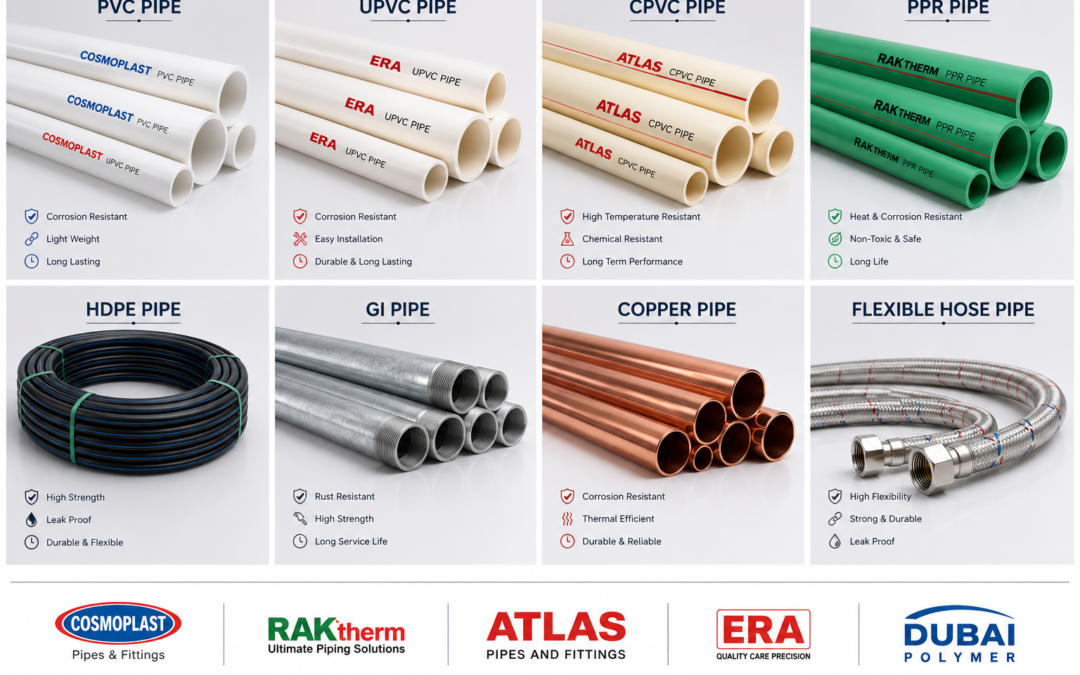
Copper Pipes for AC and Refrigeration Systems: A Practical Selection Guide
Choosing the right copper pipes for AC is an important part of planning an air-conditioning or refrigeration installation. Refrigerant pipework carries refrigerant between system components, so tube specification, outside diameter, wall thickness, cleanliness, joint quality, insulation and installation practice all affect system reliability. A tube that looks similar to the specified product is not automatically a suitable substitute.
For HVAC contractors, MEP procurement teams, refrigeration technicians and maintenance companies in Abu Dhabi and across the UAE, this guide explains what to check before ordering copper tube, how ACR tube differs from plumbing tube, and what information to include in a bill of quantities (BOQ) or request for quotation (RFQ).
1. What Is ACR Copper Tube?
ACR means air-conditioning and refrigeration. ACR copper tube is manufactured for refrigerant service and is commonly supplied in straight lengths or coils, depending on size, temper and product range. The ends are normally protected with caps, plugs or another suitable closure to help keep moisture, dust and foreign material out during storage and transport.
For field-service refrigerant tubing, ASTM B280 is a key specification to check. ASTM describes B280 as covering seamless copper tube for connections, repairs and alterations of air-conditioning and refrigeration units. The current published edition is ASTM B280-23. Always check the edition and exact requirements named in the project specification rather than relying on a generic product description.
2. ACR Tube vs Plumbing Copper Tube
One of the most important procurement checks is to distinguish refrigeration-grade ACR tube from copper tube intended for water or general plumbing service. These products may both be copper, but they are specified for different applications and may use different sizing conventions, wall thicknesses, cleanliness requirements and identification.
| Check | ACR copper tube | Plumbing copper tube |
|---|---|---|
| Typical service | Air-conditioning and refrigeration refrigerant lines | Water distribution and plumbing applications |
| Common reference | ASTM B280 | Often ASTM B88, depending on the system |
| Sizing convention | Generally specified by outside diameter | Nominal tube size is commonly used |
| Procurement priority | Refrigerant-service specification, cleanliness and sealed ends | Water-service type, pressure class and local plumbing specification |
Do not replace specified ACR tube with plumbing tube simply because the nominal dimensions appear close. The engineer or equipment manufacturer must approve any proposed alternative. ASHRAE’s pipe and tube design guidance distinguishes ASTM B280 ACR tubing from ASTM B88 water-service copper tube.
3. Understand Diameter, Wall Thickness and Temper
Refrigerant copper tube is normally ordered by its outside diameter (OD), together with the specified wall thickness and temper. Do not assume that two tubes with the same OD have the same pressure capability or suitability. Wall thickness, material condition, manufacturing standard and operating design all matter.
- Outside diameter: confirm the exact OD shown in the equipment manufacturer’s piping chart or approved drawing.
- Wall thickness: match the specified tube wall and applicable standard. Do not select by OD alone.
- Temper: annealed (soft) coils are flexible for suitable routing; hard-drawn straight lengths retain a more rigid form. The required temper depends on the system design and installation method.
- Length and form: specify coil or straight length, required length per piece and whether factory-sealed ends are required.
Never calculate an allowable working pressure from a generic online chart. Pressure suitability must be checked against the tube manufacturer’s data, the refrigerant, design temperature, wall thickness, applicable code and equipment requirements.
4. How to Select the Correct Copper Pipe for an AC System
Start with the equipment manufacturer’s piping data
Use the installation manual for the exact indoor and outdoor unit combination. Manufacturers specify permitted pipe diameters, maximum and minimum lengths, elevation differences, branch arrangements and any additional refrigerant charge requirements. These values can vary between models, capacities and refrigerant systems.
Confirm the refrigerant and design conditions
Confirm the refrigerant type, design pressure and operating temperature from the approved equipment documentation. Do not assume that a tube selected for one system can be used on another system without checking the design and manufacturer requirements.
Check the route and connection method
Review the pipe route, bends, equipment access, supports and joint locations. The tube must be compatible with the specified fittings and joining process. For brazed refrigerant joints, use the approved procedure, suitable filler material and competent technicians. Follow the equipment manufacturer’s requirements for nitrogen purging, pressure testing, evacuation and commissioning.
Specify insulation separately
Refrigerant suction lines and other pipe sections may require insulation to control heat gain, condensation and energy loss. The insulation material, thickness, vapour barrier, UV protection and finish should be selected for the actual application and project specification. Insulation does not compensate for incorrect tube sizing or poor joint workmanship.
5. Handling, Storage and Cleanliness
Cleanliness is especially important in refrigeration pipework. Moisture, dust, metal particles and other contaminants can affect the system and its components. Keep tube ends sealed until the section is ready for installation. Store coils and straight lengths in a clean, dry area, protected from impact, crushing and contamination.
- Check that product markings, standard, dimensions and manufacturer identification are legible.
- Reject or quarantine tube with crushed sections, deep scratches, corrosion, damaged ends or uncertain identification.
- Keep factory caps or plugs in place during transport and storage.
- Use clean cutting and deburring tools suitable for copper tube.
- Protect open tube ends during every stage of installation.
- Follow the approved installation, brazing, pressure-test, evacuation and commissioning procedures.
6. Common Copper Pipe Procurement Mistakes
- Ordering by the phrase “AC copper pipe” without stating the standard, OD and wall thickness.
- Substituting plumbing tube for ACR tube without engineering approval.
- Ignoring the equipment manufacturer’s maximum pipe length and elevation limits.
- Mixing tube and fittings with incompatible dimensions or joining requirements.
- Accepting unsealed tube ends or material with unclear traceability.
- Choosing insulation only by price without checking thickness, vapour barrier and exposure conditions.
- Failing to include bends, fittings, supports, insulation and other accessories in the BOQ.
7. What to Include in an HVAC Copper Pipe BOQ or RFQ
A detailed enquiry helps the supplier review the requirement and reduces the risk of receiving an unsuitable product. Include the following information wherever it is available:
- Application: split AC, VRF/VRV, chiller, refrigeration plant or another system.
- Required standard and edition, such as ASTM B280 where specified.
- Outside diameter, wall thickness and required temper for each line size.
- Coil or straight-length preference, piece length and total quantity.
- Refrigerant type and relevant equipment model or approved piping schedule.
- Required fittings, brazing materials, supports, clamps and insulation details.
- Manufacturer, approved brand or approved-equivalent requirements.
- Required certificates, test documentation, delivery location and delivery date.
Attach the equipment schedule, piping drawing or BOQ when possible. If you are requesting a replacement, provide the existing tube marking and dimensions rather than relying on a photograph alone.
8. Plumbing and HVAC Material Procurement from Ruby General Trading
Ruby General Trading LLC supplies plumbing materials and fittings for residential, commercial and industrial requirements in the UAE. Its Plumbing Materials page lists copper pipe alongside PVC, UPVC, CPVC, PPR, HDPE and GI pipe, as well as pipe fittings, valves, clamps and water-supply accessories.
For contractors coordinating several packages, Ruby’s industrial supply range and construction materials category can help with related project procurement. Buyers can also review sanitary materials for associated plumbing requirements. Exact ACR specification, size, brand, documentation and availability should be confirmed against the project requirement before ordering; do not assume every copper pipe listing is suitable for refrigerant service.
Need copper pipe or related HVAC materials for a project? Send your BOQ, equipment model, required standard and tube dimensions to Ruby General Trading for a quotation review. Contact the team at info@rubytrdg.com or call +971 50 138 7277.
Frequently Asked Questions
What is the difference between ACR copper pipe and normal copper pipe?
ACR tube is specified for air-conditioning and refrigeration service, commonly under ASTM B280. General plumbing tube may follow a different standard such as ASTM B88. Check the application and project specification before ordering.
Which standard is used for copper pipes in AC systems?
ASTM B280 is a recognised specification for seamless copper tube used in air-conditioning and refrigeration field service. Confirm the edition and additional project requirements with the engineer or equipment manufacturer.
Is copper pipe size measured by inside diameter or outside diameter for AC?
ACR tubing is generally specified by outside diameter. Always use the dimensions in the equipment manufacturer’s piping chart and approved drawings.
Can I use plumbing copper pipe for refrigerant lines?
Do not substitute plumbing tube for specified ACR tube unless the equipment manufacturer and responsible engineer approve the alternative in writing.
Should AC copper pipes be insulated?
Many refrigerant pipe sections require insulation to control heat transfer and condensation. The required material and thickness depend on the line, system design, ambient conditions and project specification.
Why are copper tube ends capped?
Caps or plugs help protect the internal tube surface from moisture, dust and foreign material during storage and handling. Keep them in place until the tube is ready for installation.
What information is needed to get a copper pipe quotation?
Provide the application, standard, outside diameter, wall thickness, temper, coil or straight-length requirement, quantity, fittings, insulation details, preferred manufacturer and delivery location.