Safety Equipment and PPE for Construction Companies in the UAE
Construction sites involve hazards that can vary from falling objects and sharp materials to dust, noise, machinery, chemicals, electrical risks and work at height. Choosing the right safety equipment and PPE for construction companies helps contractors match worker protection to the actual hazards on site while supporting a consistent safety process.
Why Safety Equipment and PPE Matter on Construction Sites
Personal protective equipment is an important part of workplace risk control, but it should support wider measures such as eliminating hazards, engineering controls, safe work procedures and training. OSHA describes PPE as equipment worn to reduce exposure to hazards that can cause workplace injuries or illnesses, and emphasizes proper fit, condition and use.
For UAE construction companies, procurement should therefore consider the job, work environment, workforce size, site rules, consultant requirements, replacement needs and the technical specifications of each PPE item.
1. Safety Helmets and Hard Hats
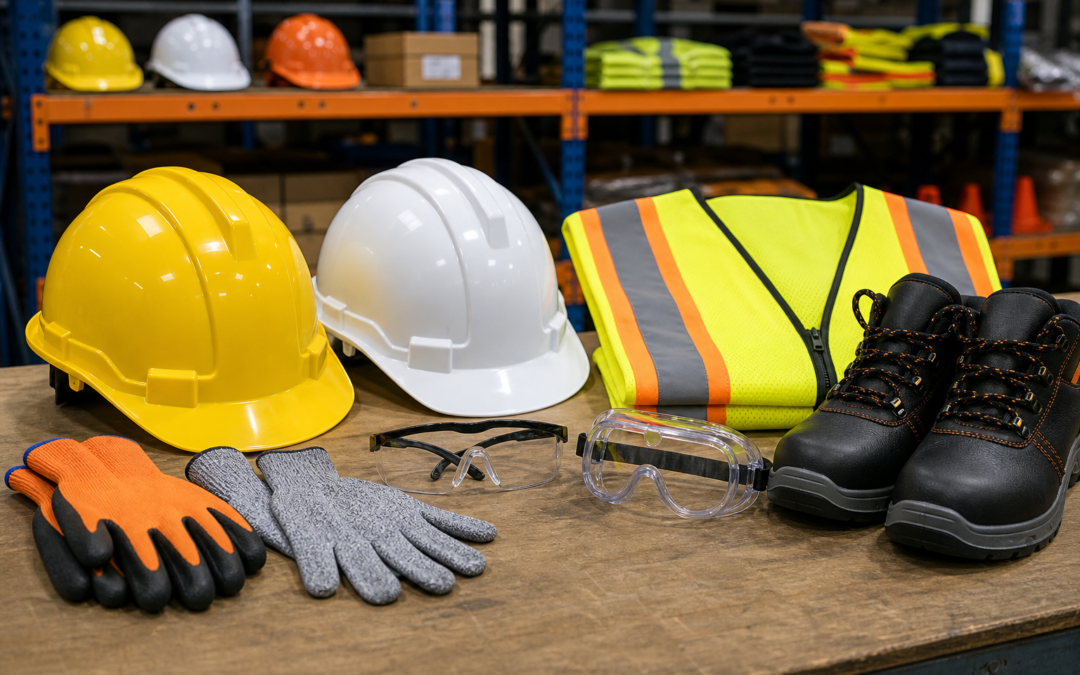
Safety helmets help protect workers from hazards such as falling objects, impact from fixed structures and certain electrical-contact risks, depending on the helmet design and application. Construction teams should check the required standard, fit, adjustment, ventilation and compatibility with other PPE such as hearing or face protection.
Helmets should be inspected regularly. Cracks, severe damage, deterioration or a helmet that has experienced a significant impact are reasons to remove it from service according to the manufacturer’s instructions.
2. Safety Shoes and Protective Footwear
Construction workers can face dropped materials, sharp objects, slippery surfaces, uneven ground and other foot hazards. Safety footwear can be selected with features such as protective toe caps, slip-resistant soles and puncture resistance according to the job requirements.
Procurement teams should consider the work activity, site conditions, required certification, comfort, size range and replacement cycle before placing a bulk order.
3. Safety Gloves for Different Tasks
There is no single glove that suits every construction task. Workers may need general handling gloves, cut-resistant gloves, chemical-resistant gloves, welding gloves or electrical protective gloves depending on the hazard.
Gloves should fit properly and provide the protection required for the task without creating new hazards. The correct specification is more important than simply choosing the thickest or most expensive option.
4. Safety Glasses and Face Protection
Eye injuries can occur during drilling, grinding, cutting, welding, concrete work, chemical handling and other activities that generate flying particles, splashes or intense light. Safety glasses, goggles and face shields should be selected according to the specific hazard.
Where face protection is used, it should be compatible with other PPE and maintained in clean, serviceable condition.
5. High-Visibility Safety Vests and Workwear
High-visibility vests and jackets help workers remain visible around vehicles, mobile equipment, roadwork and busy construction zones. Reflective workwear can be especially useful where vehicle and worker movement overlap.
For projects with large workforces, contractors can standardize colours, sizes and garment types by role or site requirement, making PPE distribution easier to manage.
6. Hearing Protection
Construction activities can expose workers to high noise from power tools, compressors, generators, cutting equipment and heavy machinery. Earplugs and earmuffs can reduce exposure when selected and used appropriately.
Noise control should start with the work process and equipment where possible. PPE can then provide additional protection when noise exposure remains above acceptable levels.
7. Respiratory Protection
Dust, fumes, vapours and other airborne contaminants can create respiratory hazards. Depending on the substance and exposure, workers may require disposable filtering masks, reusable respirators or other respiratory protection specified by the risk assessment.
The correct respirator depends on the hazard, concentration, duration of exposure, fit and required protection level. Respiratory protection should never be selected only because a product looks suitable.
8. Fall Protection Equipment
Work at height can require fall-protection systems such as full-body harnesses, lanyards, lifelines and suitable anchor systems. The right combination depends on the task, equipment, anchorage and fall-arrest strategy.
Fall-protection equipment should be inspected and maintained according to the manufacturer’s instructions and site procedures. A system that has arrested a fall may need to be removed from service and professionally assessed before any further use.
9. Protective Coveralls and Site Clothing
Coveralls and protective workwear can help protect workers from dirt, abrasion, selected chemical or thermal hazards and workplace contamination depending on the garment specification. For outdoor UAE work, comfort, breathability, fit and visibility can also affect whether workers consistently use the clothing.
Choose garments based on the task and required performance rather than treating all coveralls as interchangeable.
10. Other Construction Safety Equipment
Construction safety planning may also include safety signs, cones, barricades, warning tape, first-aid supplies, spill-control products, fire-safety equipment and site-access protection. These are not substitutes for PPE, but they can support a broader site safety system.
How to Choose Safety Equipment and PPE for Construction Companies
Before buying PPE, construction procurement teams should create a simple requirement based on the actual work being performed.
Identify the hazard: List impact, falling-object, eye, hand, foot, noise, respiratory, chemical, electrical and fall hazards relevant to the task.
Match the protection: Select PPE designed for that hazard and check the manufacturer’s technical information.
Check fit: PPE must be suitable for the worker and should not interfere with safe movement or other required equipment.
Confirm compatibility: Helmets, eyewear, hearing protection, respirators and other equipment should work together when worn at the same time.
Plan quantities: Include workforce numbers, spare units, replacement cycles, sizes and trade-specific requirements in the BOQ.
Keep documentation: For project procurement, maintain product specifications, conformity documentation and approved alternatives where required.
Safety Equipment for MEP, Industrial and Contractor Teams
MEP contractors, maintenance teams and industrial workforces often need more than basic PPE. Depending on the job, the requirement may combine safety equipment with power tools, electrical products, welding equipment, abrasives and hardware.
Ruby General Trading can support multi-category procurement through its safety equipment range, power tools, electrical and lighting products, welding equipment and hardware and fasteners.
Construction PPE Procurement in the UAE
For project buyers, PPE procurement becomes easier when the requirement is submitted as a structured BOQ or RFQ. Include the item, specification, standard or approved equivalent, size, quantity, preferred brand where applicable, delivery location and required date.
Bulk requirements can also be grouped by worker role. For example, a general labourer may need a standard head-to-toe kit, while a welder, electrician or worker at height may need additional task-specific protection.
Safety Equipment for UAE Construction Conditions
UAE construction work can involve heat, dust, outdoor exposure and long periods on active sites. PPE selection should therefore consider fit, ventilation, comfort, durability and maintenance as well as the required protection. Employers should also follow applicable UAE requirements, site rules and approved HSE procedures.
What OSHA Says About Construction PPE
OSHA’s construction PPE guidance covers common protection for the head, eyes and face, hands, feet and hearing, and stresses selecting PPE according to anticipated hazards. OSHA also states that construction PPE should fit properly. For more information, see the OSHA Personal Protective Equipment guidance and the OSHA Construction PPE Quick Card.
Why Work With a Multi-Category Supplier?
A construction project rarely needs only one PPE item. A contractor may need helmets, gloves, safety shoes, vests, goggles, respirators and hearing protection alongside tools and site supplies.
Working with a supplier that can review a broader BOQ can simplify sourcing, reduce fragmented purchasing and help project teams coordinate recurring requirements.
Frequently Asked Questions
What PPE is commonly used on construction sites?
Common PPE includes safety helmets, safety shoes, gloves, safety glasses or goggles, high-visibility clothing, hearing protection, respiratory protection and fall-protection equipment where the work requires it.
How do I choose PPE for a construction company?
Start with the hazards and tasks identified in the site’s risk assessment. Then select PPE that provides the required protection, fits the worker properly and is compatible with other equipment being worn.
Does Ruby General Trading supply safety equipment in the UAE?
Ruby General Trading supplies safety equipment and PPE for construction and industrial requirements in the UAE. Buyers can review the safety equipment and PPE range and submit their product or project requirements for quotation support.
Can construction companies order PPE in bulk?
Yes. Contractors can submit a BOQ, item list, workforce quantity or recurring requirement so the supplier can review quantities and specifications for project procurement.
What should workers check before using PPE?
Check the condition, fit, compatibility and suitability of the PPE for the task. Do not use damaged or defective equipment, and follow the manufacturer’s instructions and the site’s safety procedures.
Is one PPE kit suitable for every construction worker?
No. PPE should match the worker’s task and the hazards involved. Electricians, welders, workers at height and teams handling chemicals may require additional or different protection.
Conclusion
The right safety equipment can help construction companies protect workers while supporting more organized site operations. Effective PPE selection starts with the hazard, task and worker requirement, followed by proper fit, compatibility, inspection and replacement.
For businesses looking for safety equipment and PPE for construction companies in the UAE, Ruby General Trading can support head-to-toe PPE and related construction procurement through its multi-category supply range.
Need PPE for your construction project? Share your BOQ, item list or specifications with Ruby General Trading for sourcing and quotation support.