Paints and Painting Accessories for Construction Projects in the UAE
Paints and painting accessories for construction protect surfaces, improve appearance and help buildings withstand weather, moisture, wear and daily cleaning. Successful painting depends on selecting a suitable coating system, preparing the surface properly and using the right brushes, rollers, masking products and application tools.
1. Common Types of Construction Paint
Interior emulsion paints
Interior emulsion paints are widely used on plastered walls and ceilings in homes, offices, shops and commercial interiors. Matt finishes can help reduce the appearance of minor surface imperfections, while washable or silk finishes may suit areas that need more frequent cleaning. Choose according to the room, substrate, cleaning needs and finish specification.
Exterior paints
Exterior coatings must withstand sunlight, dust, rain, temperature changes and other environmental exposure. Select products rated for exterior use and compatible with the substrate. Correct priming and surface preparation are especially important where the surface is chalky, porous or previously coated.
Enamel and metal paints
Enamel coatings may be used on suitable metal or wood surfaces such as railings, doors, frames and selected fixtures. Metal surfaces may need rust removal, degreasing and a compatible primer. A decorative topcoat should not be assumed to provide the required corrosion protection unless its specification says so.
Primers, putty and fillers
Primers help prepare surfaces and improve adhesion where required. Wall putty, fillers and joint compounds help correct minor surface defects before finishing. These materials do not correct major structural cracks or moisture problems; the underlying cause must be addressed before painting.
Waterproofing and protective coatings
Waterproof coatings and protective systems may be used on selected roofs, walls, wet areas or exposed surfaces. The correct system depends on water exposure, substrate, movement, traffic, UV exposure and project design. A paint marketed as waterproof is not automatically suitable for every roof, tank or below-ground application.
2. Essential Painting Accessories
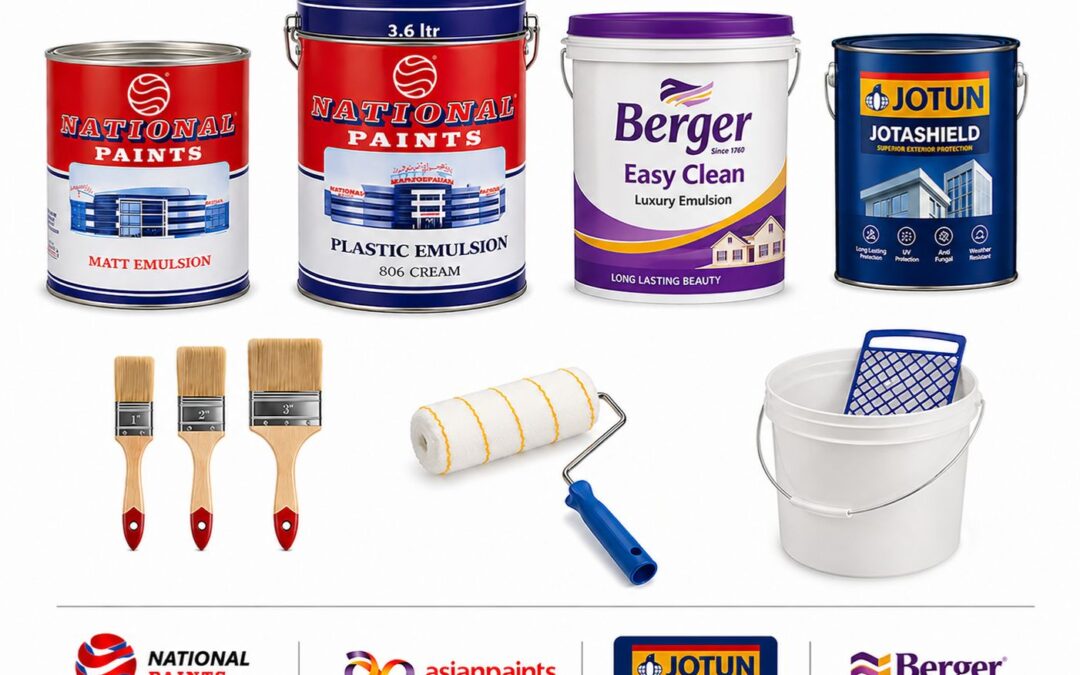
- Paint brushes: useful for edges, corners, trim, frames and detailed areas.
- Paint rollers: cover larger wall and ceiling areas efficiently; roller pile should match surface texture and coating viscosity.
- Roller trays and buckets: support controlled loading, mixing and movement around the work area.
- Masking and painter’s tape: protect adjacent surfaces and create cleaner edges when used on compatible finishes.
- Drop sheets and plastic protection: help protect floors, furniture, fixtures and finished work.
- Scrapers and filling knives: remove loose coating and apply fillers or putty.
- Sanding sheets and blocks: smooth repaired areas and help prepare surfaces for coating.
- Extension poles, ladders and supports: improve access; select and use access equipment according to site safety procedures.
- Mixing tools: help achieve a uniform coating where the product instructions require mixing.
3. Where Paint Is Used in Construction
Residential buildings: interior walls, ceilings, doors, metal railings and exterior façades. Commercial fit-outs: offices, retail units, schools, hospitality areas and common spaces. Industrial facilities: selected walls, floors, machinery enclosures and metalwork using coatings rated for the service environment. Infrastructure and exterior works: surfaces exposed to weather or wear where the specified coating system is suitable. Maintenance and refurbishment: repainting and touch-ups after proper assessment of the existing coating and substrate.
4. Surface Preparation: The Step That Determines the Finish
Inspect the substrate before painting. Remove loose or flaking paint, dust, grease, efflorescence and other contaminants using methods appropriate to the surface. Repair suitable minor defects, allow repairs to dry, sand where required and remove sanding dust. Investigate dampness, leaks, mould or active cracking before applying new coatings.
Use the primer recommended for the substrate and topcoat. Applying a new coating over a weak or incompatible existing layer can lead to peeling, blistering or uneven colour. On metal, corrosion and surface contamination must be addressed according to the coating specification.
5. How to Choose Paint for UAE Conditions
Consider the surface, indoor or outdoor use, sun exposure, humidity, expected cleaning, abrasion, chemical contact and desired finish. For exterior work, review the manufacturer’s temperature and weather limitations during application and curing. For coastal or industrial environments, confirm corrosion-protection requirements and the full coating system rather than selecting only by colour.
Calculate the required quantity using the product’s stated coverage and the measured area, allowing for substrate porosity, number of coats and wastage. Do not rely on a generic coverage figure when the product data sheet gives a specific rate.
6. Application and Quality Checks
Follow instructions for stirring, dilution, tools, application thickness, recoat interval and drying time. Keep batches consistent where colour matching matters. Test a small area when working over unknown existing coatings or unusual substrates. Inspect the finished surface for missed areas, runs, pinholes, uneven sheen and adhesion issues after the specified drying period.
7. Common Painting Problems and Prevention
- Peeling: often linked to poor adhesion, dampness or weak old coatings.
- Blistering: may result from trapped moisture, heat or application over an unsuitable surface.
- Patchy finish: can be caused by uneven absorption, inconsistent application or insufficient coats.
- Cracking: may indicate a coating mismatch, excessive thickness or movement in the substrate.
- Rust bleed-through: suggests the metal preparation or protective coating system may be inadequate.
Diagnose the cause before repainting; simply adding another coat may hide the issue temporarily without solving it.
8. Safety and Storage
Review the safety data sheet, provide ventilation, use suitable gloves and eye protection, and follow requirements for respiratory protection where relevant. Keep products away from ignition sources when required, close containers after use and store within the stated temperature range. Dispose of leftover paint and cleaning materials according to local requirements.
Internal Resources and Procurement
Explore Ruby’s dedicated paints and painting accessories page, as well as abrasives and polishing materials, construction materials and power tools. For chemical handling and hazard communication, consult the OSHA Hazard Communication resources and the manufacturer’s safety data sheet.
For a quotation, provide coating type, colour code, pack size, quantity, substrate, indoor or outdoor application, required performance and delivery location. Include primers, fillers and accessories in the material list so the full application system can be planned.
Frequently Asked Questions
Which paint is best for exterior walls?
Choose a coating designed for exterior use and compatible with the substrate and local exposure. The exact system depends on surface condition, weathering, moisture and project specification.
Do walls always need primer?
Not every surface needs the same primer, but many new, porous, repaired or previously coated surfaces require a suitable primer or sealer. Follow the coating system instructions.
How do I select a paint roller?
Choose roller material and pile length according to the coating and surface texture. A smoother surface generally needs a shorter pile than a rough surface.
Can waterproof paint fix an active leak?
Not necessarily. Identify and repair the source of water ingress and use a waterproofing system designed for the location and exposure.
What should be included in a painting materials BOQ?
Include paint type, colour, pack size, quantity, primer, putty or filler, sanding materials, brushes, rollers, masking and surface-protection products.
Conclusion
Good construction painting combines the right coating, compatible preparation materials and appropriate accessories. Planning the complete system helps contractors improve finish quality, protect surfaces and reduce rework across residential, commercial and industrial projects in the UAE.