Adhesives, Sealants and Tapes for Construction Projects in the UAE
Adhesives, sealants and tapes for construction help contractors join materials, close gaps, control air and water penetration, protect finishes and complete installation work neatly. The right product can improve the durability and appearance of a project, but selection must match the surface, movement, moisture, temperature and service conditions.
What Is the Difference Between Adhesives, Sealants and Tapes?
Adhesives bond two surfaces together. Sealants fill joints and gaps while helping accommodate movement or prevent air, dust and moisture from passing through. Tapes may be used for masking, temporary holding, insulation, joining, surface protection or packaging. Some products overlap in function, so always follow the product data sheet rather than choosing by name alone.
1. Construction Adhesives and Their Uses
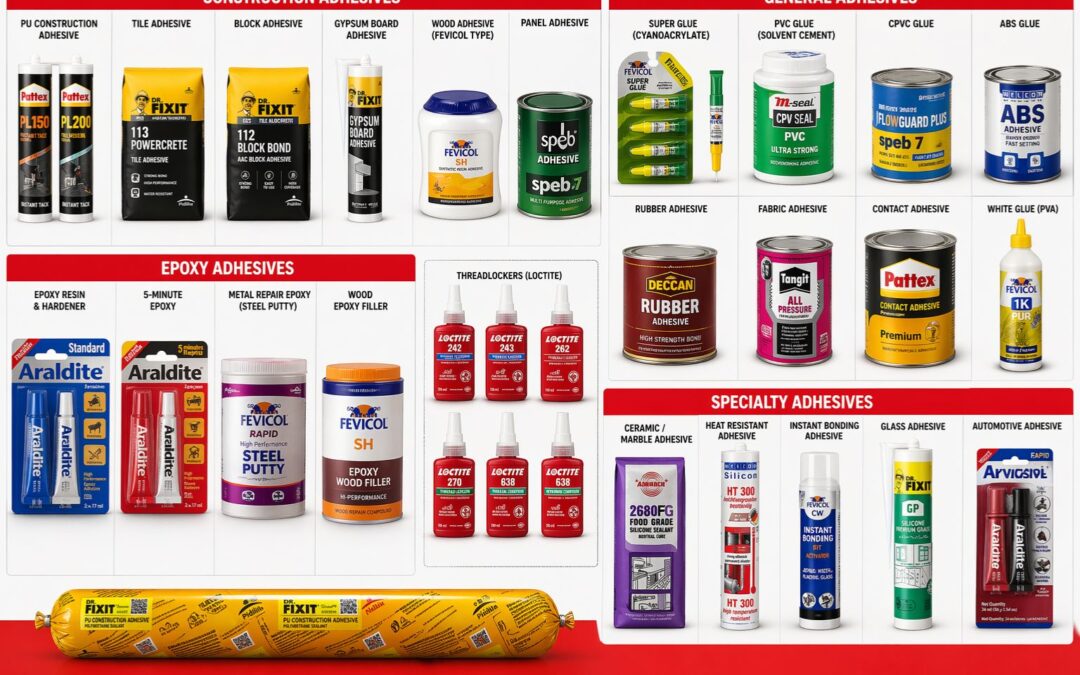
Construction adhesives are used for bonding materials such as wood, panels, trims, insulation, flooring components and selected building elements. Depending on the formulation, they may provide fast grab, flexible bonding or a stronger permanent bond. Applications include interior fit-outs, cabinetry, decorative panels, skirting, repairs and selected installation work.
Before use, check substrate compatibility, surface preparation, open time, curing time, temperature range and whether mechanical fixing is also required. Do not use a general-purpose adhesive for structural or safety-critical bonding unless its technical documentation specifically permits that application.
2. Silicone and Other Sealants
Silicone sealants are commonly used around sanitary fixtures, glazing joints and other compatible joints where flexibility and moisture resistance are important. Other sealant types may be better suited to construction joints, concrete, metal, façade work or paintable gaps. Polyurethane, acrylic and hybrid sealants have different properties and should not be treated as interchangeable.
Typical uses include sealing gaps around windows and doors, joints in kitchens and bathrooms, perimeter sealing, selected façade joints and weather protection. Check whether the sealant is suitable for the substrate, joint width, expected movement, exposure to UV, water contact and whether it can be painted.
3. Waterproofing and Joint Sealing
Sealants can help reduce water ingress at joints and interfaces, but they are not automatically a substitute for a complete waterproofing system. Wet areas, balconies, roofs, façades and below-grade structures may require compatible membranes, primers, joint backing materials and detailing designed for the project.
Clean and prepare surfaces according to the manufacturer’s instructions. Where specified, use backing rods to control sealant depth and avoid three-sided adhesion. Allow the correct curing time before exposing the joint to water or movement.
4. Tapes Used on Construction Sites
- Masking and painter’s tape: helps create clean paint edges and protect adjacent surfaces during finishing.
- Duct tape: supports temporary holding and general maintenance where the product is appropriate; it should not replace permanent mechanical or electrical solutions.
- Double-sided tape: bonds selected trims, panels, signs and accessories when the surface and load suit the tape.
- Thread seal tape: supports sealing of compatible threaded pipe connections; use the correct tape and installation method for the connection and service.
- Foam and weather-sealing tapes: can help reduce drafts, vibration or gaps in suitable applications.
- Protective tapes and films: help protect finished surfaces during transport or installation.
Do not use ordinary tape as a substitute for certified electrical insulation, fire stopping, pressure-rated sealing or other regulated applications.
5. How These Products Are Used Across Construction Trades
Civil and concrete work: selected joint sealants, repair compounds and bonding products may be specified for joints and repairs. MEP installation: thread-sealing products, suitable tapes and sealants are used around compatible services and penetrations. Interior fit-out: adhesives, masking tapes and paintable sealants help install trims, panels and finish details. Windows and façades: compatible glazing and weather sealants help manage joints and weather exposure. Plumbing and sanitary installation: suitable sealants and thread-sealing products support compatible connections, subject to system instructions. Maintenance: tapes and adhesives can support repairs where the product is rated for the task.
6. Choosing the Right Product
Before purchasing, confirm the material being bonded or sealed, whether the joint is static or moving, indoor or outdoor exposure, moisture and UV conditions, temperature range, required strength, curing time, finish and any relevant code or project approval. Review technical data sheets and safety data sheets, especially for chemical products.
Surface preparation is essential: remove dust, oil, loose paint and contamination; use a primer only when required; and check whether the product needs a dry or damp surface. Apply within the stated temperature range and allow sufficient curing time.
Common Mistakes to Avoid
- Choosing a product only by price or appearance.
- Using a sealant that cannot accommodate the expected joint movement.
- Applying adhesive to an incompatible or contaminated surface.
- Painting over a sealant that is not paintable.
- Exposing the joint to water or load before curing.
- Using general-purpose products for structural, fire-rated, electrical or pressure-critical applications without approval.
Procurement Checklist for Contractors
Include product type, brand or approved equivalent, cartridge or roll size, colour, substrate, application, quantity, delivery location and any required technical documents in your RFQ. For larger projects, group products by trade and work package to simplify procurement and avoid last-minute shortages.
Explore Ruby’s dedicated adhesives, sealants and tapes page, plus construction materials, hardware and fasteners, paints and painting accessories and sanitary materials pages for related construction requirements. For workplace chemical handling guidance, consult the OSHA Hazard Communication resources and the product’s own safety documentation.
How Ruby General Trading Supports Construction Procurement
Ruby General Trading supports industrial and construction enquiries across the UAE. Share a BOQ, product list, required brand, technical specification or a photo of the item to help the team review the request. Product suitability and availability should be confirmed for the intended application before ordering.
Frequently Asked Questions
What adhesive is best for construction?
There is no single best adhesive. Selection depends on the materials, load, movement, environment, curing time and manufacturer’s stated application.
Can silicone sealant be painted?
Many standard silicone sealants are not paintable. If a painted joint is required, choose a product specifically documented as paintable and compatible with the finish.
Can tapes replace screws or mechanical fixings?
Only where the tape is specifically designed and approved for the application and load. Heavy, structural or safety-critical assemblies may require mechanical fixing.
How long should sealant cure?
Curing varies by chemistry, bead size, humidity, temperature and product. Follow the technical data sheet and do not assume the surface skin means the full bead has cured.
What information should I provide when requesting a quotation?
Provide product type, size, colour, quantity, surface or material, application, brand preference and any required specification or certification.
Conclusion
Adhesives, sealants and tapes play different but complementary roles in bonding, joint sealing, surface protection and finishing. Choosing the correct product and applying it according to manufacturer guidance helps contractors achieve reliable results and reduce rework on UAE construction projects.