
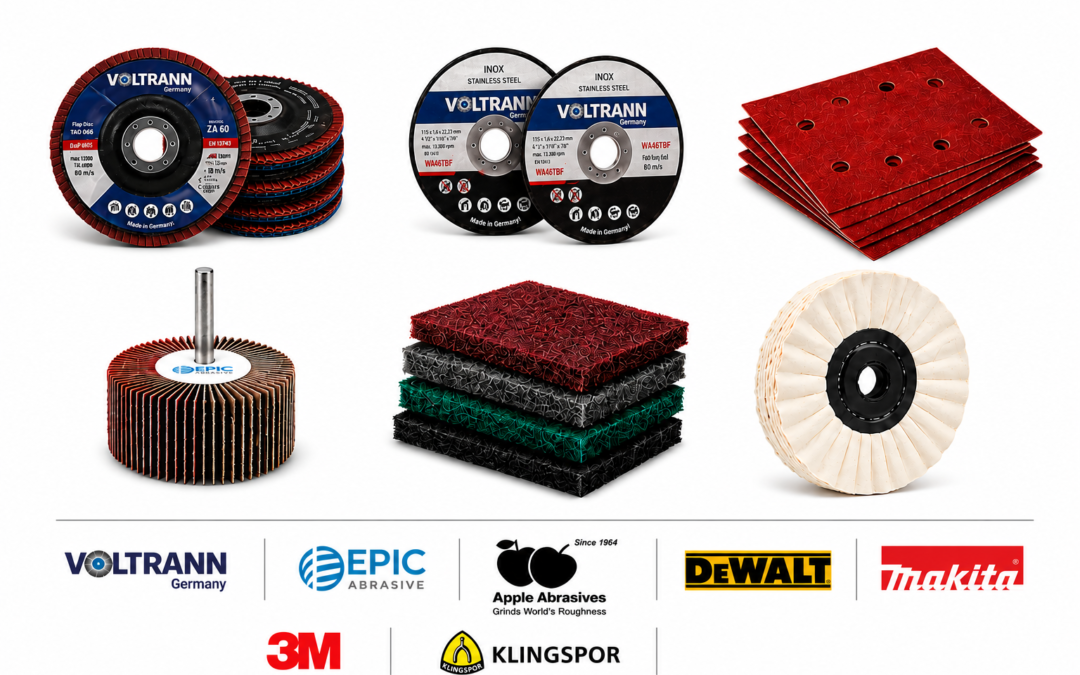
Abrasives and Polishing Materials for Construction and Industrial Work in the UAE
Abrasives and polishing materials remove material, smooth rough surfaces, prepare substrates and improve the finish of metal, stone, wood, concrete and other compatible materials. Construction contractors, fabricators, fit-out teams and maintenance technicians use different abrasive products depending on the material, machine, required finish and amount of material to remove.
1. Cutting Discs and Cut-Off Wheels
Cutting discs are used with compatible machines to cut metal, stainless steel, masonry or other specified materials. The disc must match the material, diameter, bore, thickness, machine speed and intended operation. A disc designed for cutting should not be used for side grinding unless the manufacturer specifically permits it.
Construction uses include cutting metal sections, pipes, rods, channels, fasteners and selected masonry products. Fabrication workshops use cutting discs to prepare parts before assembly or welding. Always confirm the disc’s maximum RPM and use the guard specified for the machine.
2. Grinding Wheels and Grinding Discs
Grinding products remove excess material, smooth welds, shape edges and clean selected surfaces. Wheel type and abrasive grade depend on the workpiece, desired removal rate and finish. Heavy grinding and fine finishing generally require different products.
After fabrication, a suitable grinding disc may be used to remove burrs or blend weld areas where the procedure allows. Avoid excessive pressure, side loading or use on a material not listed by the manufacturer.
3. Flap Discs and Surface-Conditioning Discs
Flap discs combine overlapping abrasive flaps and are often used for blending, deburring and finishing metal. Different grit grades allow operators to move from more aggressive removal to finer surface preparation. Non-woven surface-conditioning discs can help clean, blend or finish selected surfaces with less aggressive cutting than some conventional abrasives.
Select grit and disc type according to whether the goal is stock removal, weld blending, scratch refinement or final preparation for coating. A finer abrasive may improve the finish but will generally remove material more slowly.
4. Sandpaper, Abrasive Sheets and Rolls
Sandpaper and abrasive rolls are common for woodwork, wall preparation, paint finishing, metal finishing and general maintenance. Aluminium oxide is common for many woodworking and general sanding tasks; silicon carbide is used for certain fine finishing and wet/dry applications. Always check the product’s intended material and whether wet use is permitted.
Construction painters use sanding sheets to smooth filler and repaired surfaces before coating. Fit-out and carpentry teams use them to refine wood surfaces, edges and coatings. Choosing the right grit prevents unnecessary scratches and reduces the number of finishing steps.
5. Wire Brushes and Rust-Removal Products
Hand brushes, cup brushes and wire wheels can remove loose rust, scale, paint residue and contamination from suitable surfaces. Wire type, brush diameter, mounting and machine speed matter. Stainless steel wire may be needed for certain stainless-steel work to reduce contamination risk; confirm the specification before use.
For steel structures, handrails, supports and fabricated components, surface preparation must match the specified coating system. Abrasive cleaning and power brushing are not automatically equivalent to a specified blast-cleaning standard.
6. Polishing Pads for Marble, Granite and Tiles
Diamond polishing pads and stone-finishing abrasives are used on compatible stone and tile surfaces to smooth edges, refine scratches and achieve a selected sheen. Wet or dry use depends on the pad and machine. Stone type, grit sequence, water requirements and machine speed affect the result.
Tile installers may use suitable pads to finish exposed edges and improve transitions. Test an inconspicuous area and follow the stone or tile supplier’s recommendations to avoid burning, uneven gloss or surface damage.
7. Abrasive Accessories
Backing pads, mandrels, holders, adapters and sanding drums help connect or support abrasive products. Accessories must match the machine, size, speed and attachment system. Never improvise an adapter or use a damaged backing pad, spindle or retaining flange.
Applications Across Construction and Industry
- Structural steel and fabrication: cutting, deburring, weld blending and preparation before coating.
- Concrete and masonry: selected grinding, edge work and surface preparation using products specifically rated for the material.
- Carpentry and interior fit-out: sanding timber, panels, fillers and coated surfaces.
- Painting and decorating: smoothing putty and preparing compatible surfaces between coats.
- Stone and tile installation: edge finishing and polishing with compatible diamond abrasives.
- Maintenance workshops: cleaning, rust removal, sharpening or finishing where the product is designed for the task.
How to Choose the Correct Abrasive
Confirm the workpiece material, operation, machine type, disc dimensions, bore or mounting, maximum RPM, grit, required finish and working environment. Check compatibility with stainless steel, aluminium, stone, wood or coated surfaces as applicable. If the work is part of a controlled project specification, match the abrasive process to that requirement.
Safety: Critical Checks Before Use
Inspect abrasive products for cracks, damage, moisture exposure or expired shelf-life where relevant. Check the machine guard, flange, mounting and speed rating. Wear suitable eye and face protection, hearing protection, gloves and respiratory protection according to the task risk assessment. Keep bystanders clear of the line of fire and secure the workpiece.
Never exceed the marked maximum speed. Do not remove guards or use a cutting disc for side grinding unless expressly permitted. Follow the machine and abrasive manufacturer’s instructions and site hot-work procedures where sparks could ignite materials.
Common Mistakes
- Using a disc with the wrong diameter, bore or RPM rating.
- Choosing a grit that is too coarse for the final finish.
- Applying excessive force, which can overheat the workpiece or damage the abrasive.
- Using one abrasive for multiple materials without checking compatibility.
- Failing to remove dust and contamination before applying paint or coating.
Related Ruby Product Pages
Review Ruby’s abrasives and polishing materials range, power tools, welding equipment, paints and painting accessories and construction materials. For workplace machine and tool safety information, consult the OSHA machine guarding resources and the specific tool manufacturer’s guidance.
Procurement Tips
When requesting a quotation, include abrasive type, dimensions, bore, grit, material, machine model or speed, quantity and intended task. For recurring jobs, standardise the most-used disc sizes and grades, while keeping separate products for different materials and operations. Confirm bulk quantities and delivery requirements before the work schedule begins.
Frequently Asked Questions
What is the difference between cutting and grinding discs?
Cutting discs are designed primarily for cutting, while grinding discs are designed for material removal and surface work. Use each only for the operations allowed by its manufacturer.
Which abrasive is suitable for weld finishing?
The choice depends on the base material, weld profile and desired finish. Grinding discs, flap discs and finer finishing products may be used in stages where the procedure allows.
Can the same abrasive be used on steel and stainless steel?
Not always. Confirm the abrasive’s material compatibility and contamination requirements, particularly for stainless steel and other sensitive surfaces.
How do I choose sandpaper grit?
Coarser grits remove material faster; finer grits refine the surface. Choose a sequence appropriate to the material and final coating or finish.
What safety checks matter most?
Check the speed rating, dimensions, mounting, guard, product condition and PPE. Never exceed the maximum RPM or use an abrasive for an operation it is not designed to perform.
Conclusion
Correct abrasive selection improves productivity, surface quality and safety. Match cutting, grinding, sanding and polishing products to the material and operation, and follow the tool manufacturer’s instructions for mounting, speed and protection.